

How AI Video Analytics is Improving Warehouse Security and Logistics Operations
Artificial Intelligence | By Dinesh Kumar | 09-04-2026
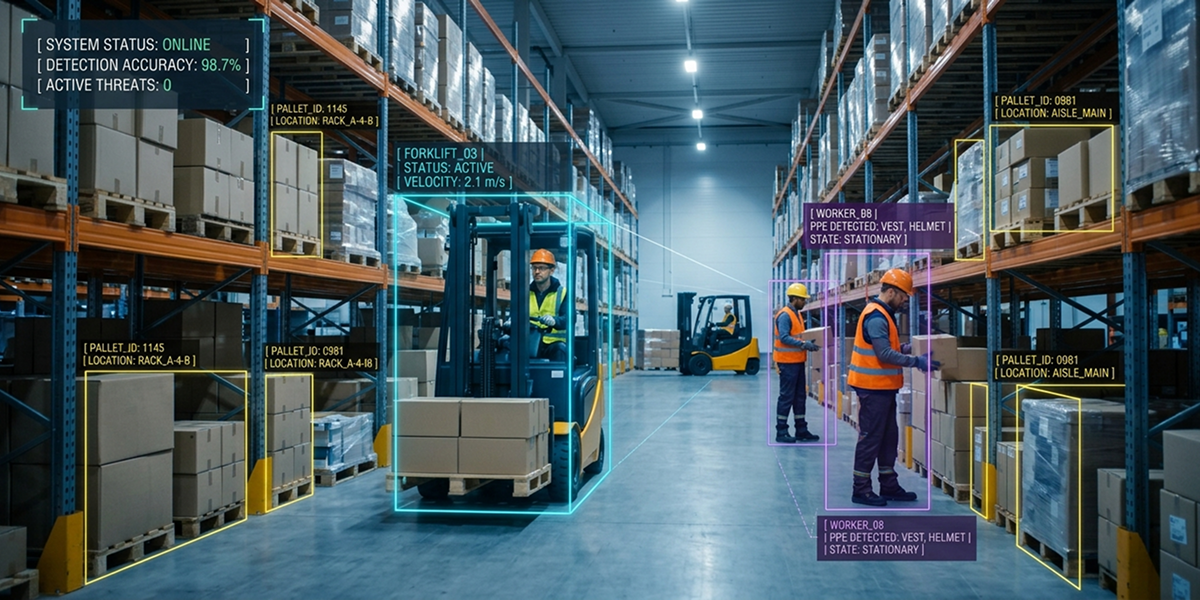
Warehouses and logistics hubs have become the backbone of modern supply chains. With the rapid growth of e-commerce, global distribution networks, and just-in-time delivery expectations, these environments are now more dynamic and complex than ever before. Every day, warehouses handle a constant flow of goods, vehicles, workers, and equipment, all operating under tight timelines and high accuracy requirements.
In such fast-paced settings, maintaining security while ensuring smooth operations is a growing challenge. Issues such as unauthorized access, inventory loss, unsafe movement, and operational bottlenecks can disrupt workflows and lead to significant financial and safety risks. While traditional CCTV systems have long been used to monitor these environments, they often fall short when it comes to real-time awareness and proactive decision-making.
AI video analytics is emerging as a practical solution to these challenges. By analyzing video footage in real time and identifying patterns, movements, and events automatically, it enables warehouses to move beyond passive surveillance. Instead of simply recording what happens, systems can now help teams understand what is happening and respond more effectively.
The Changing Nature of Warehouse and Logistics Operations
Warehousing is no longer just about storing goods. Today’s facilities function as high-speed operational centers that coordinate receiving, sorting, storing, picking, packing, and dispatching—all within tight delivery windows.
Several factors have contributed to this transformation:
- E-commerce expansion has increased order volumes and reduced acceptable delivery times.
- Larger warehouse footprints mean more zones to monitor, including storage areas, loading docks, and transit corridors.
- Increased workforce movement adds complexity, especially in facilities operating in multiple shifts.
-
Heavy vehicle and forklift activity introduces both operational and safety risks.
Inventory value concentration raises the stakes for security and loss prevention. As a result, warehouse operators require better visibility across their entire facility—not just for security, but also for improving efficiency and reducing delays. Traditional systems provide visibility in the form of recorded footage, but they often lack the intelligence needed to turn that visibility into actionable insights.
Why Traditional Surveillance is No Longer Enough
Traditional surveillance systems have played an important role in warehouse monitoring, but their limitations are becoming more apparent as operations grow more complex.
Limited Real-Time Awareness
While cameras capture video continuously, human operators cannot monitor every screen effectively. Important events may go unnoticed, especially in large warehouses with dozens or hundreds of camera feeds.
Delayed Response to Incidents
In many cases, incidents such as unauthorized entry, misplaced inventory, or unsafe movement are only identified after they have already occurred. This delay can result in losses, safety hazards, or operational disruptions.
Operational Blind Spots
Conventional systems are not designed to analyze patterns. They do not provide insights into recurring congestion points, inefficient workflows, or unusual activity trends that could impact productivity.
Human Monitoring Fatigue
Continuous monitoring leads to fatigue, especially during long shifts. Over time, attention levels drop, increasing the likelihood of missed incidents.
Scalability Challenges
As warehouses expand or operate across multiple locations, scaling manual monitoring becomes costly and inefficient.
These limitations highlight the need for a more intelligent approach one that not only captures video but also understands and interprets it.
What AI Video Analytics Means in a Warehouse Context
AI video analytics refers to the use of artificial intelligence and machine learning to automatically analyze video footage and extract meaningful insights. In a warehouse environment, this means monitoring people, vehicles, and goods movement in real time.
Instead of relying on human observation, AI systems can:
- Detect specific events such as intrusion or restricted access
- Identify objects like forklifts, trucks, or pallets
- Analyze movement patterns and behavior
- Trigger alerts based on predefined conditions
For example, if a person enters a restricted storage area or a vehicle remains idle for too long at a loading dock, the system can immediately notify the relevant team. This shift from passive recording to active monitoring enables faster response and better decision-making.
In practical terms, AI video analytics acts as an additional layer of intelligence on top of existing camera systems, helping organizations gain more value from their surveillance infrastructure. Businesses exploring how such systems are being applied in real environments can review examples of modern AI video analytics solutions to better understand the broader capabilities now available for security and operational monitoring.
Key Ways AI Video Analytics Improves Warehouse Security
Security remains a primary concern in warehouse environments, particularly where high-value inventory and continuous movement are involved.
-
Unauthorized Access Detection
AI systems can monitor entry points, restricted zones, and storage areas to detect unauthorized access. Alerts can be triggered instantly, allowing security teams to respond quickly.
-
Perimeter and Intrusion Monitoring
Warehouses often operate across large premises, making perimeter security essential. AI analytics can identify unusual movement around boundaries, especially during non-operational hours.
-
Theft and Shrinkage Prevention
By monitoring activity in critical areas such as loading docks and inventory zones, AI helps reduce the risk of theft and shrinkage. Suspicious patterns can be flagged for further review.
-
Suspicious Activity Detection
Unusual behavior, such as loitering in sensitive areas or repeated access attempts, can be detected automatically, improving situational awareness.
-
Vehicle Entry and Exit Monitoring
Tracking vehicle movement at gates ensures better control over incoming and outgoing shipments, reducing the chances of unauthorized or unrecorded activity.
How AI Video Analytics Supports Logistics Operations
Beyond security, AI video analytics plays a significant role in improving operational efficiency within warehouses.
-
Dock Monitoring
Loading and unloading docks are critical points in logistics operations. AI can track truck arrival times, monitor dock utilization, and identify delays in loading or unloading.
-
Forklift and Internal Vehicle Movement
Monitoring the movement of forklifts and internal vehicles helps improve coordination and reduce the risk of collisions or inefficiencies.
-
Congestion Detection
AI can identify areas where movement slows down due to congestion, helping managers optimize layout and workflow.
-
Queue and Waiting Time Visibility
By tracking queues at entry gates or loading zones, operators can identify bottlenecks and improve scheduling.
-
Improved Incident Review
When issues such as damaged goods or delayed shipments occur, AI-powered search tools make it easier to locate relevant footage quickly, reducing investigation time.
Workplace Safety in Warehouses
Safety is a critical concern in warehouses due to the presence of heavy equipment, high shelving, and continuous movement.
-
PPE Compliance Monitoring
AI can help ensure that workers are wearing required safety equipment such as helmets or reflective vests where applicable.
-
Unsafe Zone Monitoring
Alerts can be generated when individuals enter hazardous zones or areas restricted to certain personnel.
-
Human-Vehicle Interaction Risks
Monitoring interactions between workers and moving equipment helps reduce the likelihood of accidents.
-
Faster Incident Response
Real-time alerts enable quicker action in case of safety incidents, potentially reducing the severity of injuries or damage.
Common Use Cases in Real Warehouse Environments AI video analytics can be applied across various areas within a warehouse:
- Monitoring entry and exit gates
- Securing high-value inventory zones
- Observing loading and unloading activities
- Detecting congestion in dispatch areas
- Tracking movement in restricted storage sections
- Supporting investigation of missing or damaged goods
These practical applications make the technology relevant for both security teams and operations managers.
Business Benefits of AI Video Analytics for Warehousing and Logistics
Implementing AI video analytics provides a range of tangible benefits:
- Improved security oversight through continuous monitoring
- Faster incident detection with real-time alerts
- Enhanced operational visibility across all warehouse zones
- Reduced manual monitoring effort, lowering dependency on large teams
- Stronger accountability with recorded and searchable events
- Faster investigation processes for operational issues
These benefits contribute to both cost savings and improved performance.
While AI video analytics offers significant advantages, proper implementation is essential to achieve the best results.
Conclusion
As warehouses continue to evolve into high-speed, high-density operational environments, the need for smarter monitoring solutions is becoming increasingly clear. Traditional surveillance systems, while useful, are no longer sufficient to handle the complexity and scale of modern logistics operations.
AI video analytics offers a more intelligent approach by combining real-time monitoring with automated detection and analysis. It not only enhances security but also provides valuable insights that can improve operational efficiency and safety.
By turning video data into actionable information, warehouse operators can gain better control over their facilities, respond faster to incidents, and optimize their workflows. As the logistics industry continues to grow, technologies like AI video analytics are set to play a key role in shaping more efficient and secure operations.

Dinesh Kumar
| AuthorDinesh Kumar is associated with Katomaran Technologies and writes about AI-powered surveillance, video analytics, and intelligent security solutions. His work focuses on simplifying complex technology topics and presenting them in a way that is useful, relevant, and easy for business readers to understand.
Recent Blogs
.jpg "Benefits of Order Tracking Apps for E-Commerce")
Benefits of Order Tracking Apps for E-Commerce
Mobile Apps | 24-09-2026
.jpg "10 Ways Salesforce SMS Improves Customer Engagement")
10 Ways Salesforce SMS Improves Customer Engagement
Salesforce | 23-09-2026
.jpg "How Full Stack Development Supports Scalable Enterprise Apps")
How Full Stack Development Supports Scalable Enterprise Apps
Mobile Apps | 22-09-2026
.jpg "Seedance 2.5 vs Higgsfield for App Launch Videos")
Seedance 2.5 vs Higgsfield for App Launch Videos
Technology | 14-09-2026