

Augmented Reality in Retail: Driving Innovation and Enhancing Consumer Satisfaction
Augmented Reality | By Teja Kurane | 16-09-2025
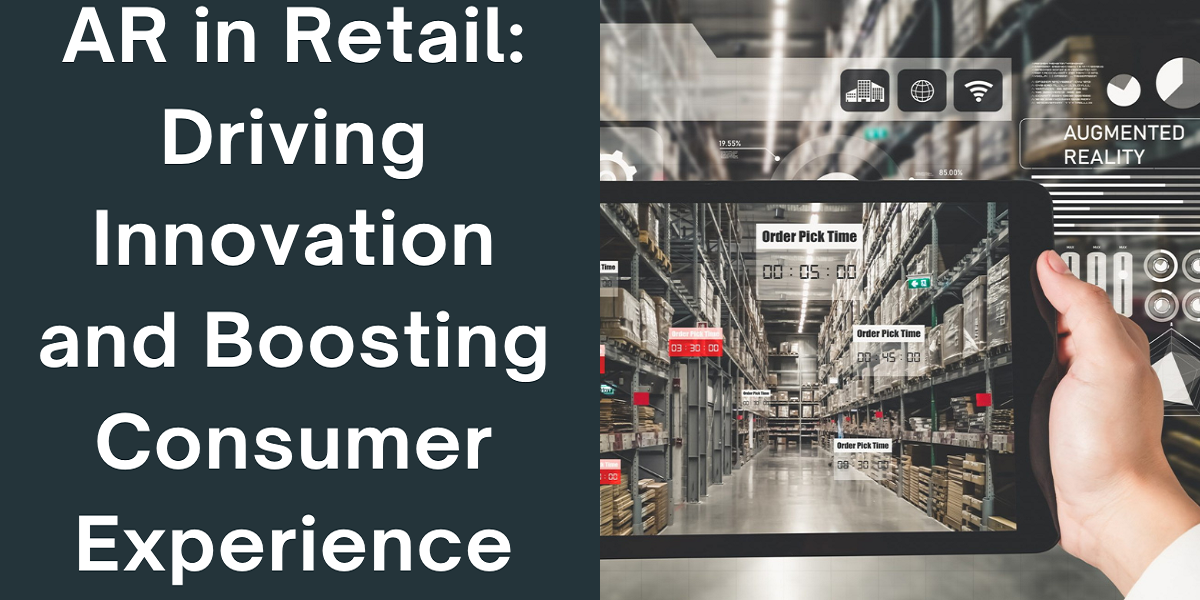
The Augmented Reality has become an innovative technology in the retail sector that is changing customer behavior and expectations. AR presents endless opportunities for interaction with brands, the product, and the environment as it places digital content against real-world backdrops. Beyond being a matter of novelty, the use of AR in retail is strategically being considered by operators in an attempt to raise consumer engagement, gain operational efficiency, and increase conversion rates.
This acceptance is pretty much in accord with general industry trends of experiential commerce and digital transformation, where the customer's purchase decision is increasingly made on the basis of immersive and customized experiences. AR is being utilized by retailers to provide virtual try-ons, place complicated objects in reality, and provide customized experiences to create dynamic and truly engaging shopping experiences.
Augmented Reality in Retail
A device that adds computer-generated sounds, visuals, or other sensory data to a user's perception of the actual world is known as augmented reality. AR adds additional virtual elements to your current physical world, letting users experience both things together, unlike Virtual Reality (VR) which creates a completely immersive digital setting. AR in retail is closing the gap between consumers who shop online, with those who shop offline.
Retail applications of augmented reality involve a number of different technologies to enhance the customer's decision making and shopping experience. For example, smart mirrors and other displays offer virtual time options in which customers can try on garments, accessories, or cosmetics without needing to go through the customer trials that happen in-person. AR-enabled mobile applications typically allow customers to use "trial on" while they look at digital overlays placed on real world products through their phones or tablet devices.
New to market AR product innovations such as AR glasses and AR headsets can enable consumers to have a more immersive and hands-free experience, where they can have guidance moving through stores and viewing products where they are located in real time. Retailers can design and install dynamic displays or interactive demonstrations that are physically demonstrated on real-world surfaces using projection based augmented reality.
Applications of Augmented Reality in Retail
Virtual Try-Ons
One of the most prominent and massively adopted virtual try-on technologies is the augmented reality application in the retail sector. The technology enables the customers to view the products such as apparels, accessories, footwear, and makeup that are wearable to them in the absolute absence of any physical or manual handling. Employing AR-enabled mirrors in shops or smart device applications with sophisticated facial and bodily identification, users can truly depict how attire may fit, how spectacles suit, or what different colors of beauty products would look like on their skin.
Consequently, this not only delivers a more precise product preview, thus empowering consumers to make optimum buying choices but also lessens the number of products returns considerably, particularly in industries like fashion and beauty where the provision of the right fit and look matter most.
Product Visualization
Customers can view a product in the real environment before deciding to buy it; that is how AR is revolutionizing retail. Home improvement companies provide AR for wall colors or to drape new fabrics on walls. Whereas furniture stores provide AR apps to help a buyer visualize a sofa or dining table that fits into and complements the living areas. Because the customer may test patterns, sizes, colors, or textures in AR, the intention is to alleviate the concern and hesitation that accompany both online and physical store shopping experiences. Besides giving customer confidence, this tool also makes easier and more satisfying buying decisions.
Interactive In-Store Experiences
Augmented reality is a major element of the retailers plan to attract in-store traffic and engage with their customers more. The AR advantage is that it converts traditional displays into interactive hubs where users can obtain more product information, instructions, or even multimedia content by using their mobiles besides scanning a QR code.
Besides just training the customers, this innovative business method not only differentiates the stores from their competitors but also makes them attractive with outstanding tech-savvy encounters. Customers get to spend more time on-site, dig deeper into the products, and establish stronger relationships with the business as a result, which, in turn, becomes a sales increase and loyalty cultivation over time.
Gamification and Brand Storytelling
Gamifying experiences such as treasure hunts, quizzes, or virtual challenges which players can be rewarded with discounts, promotions, or loyalty points, can help merchants to tell their brand story in a new and interesting way with the support of AR. Interactive events not only attract customers but also provide engaging and memorable brand interactions. AR expands marketing reach through user-generated content by combining enjoyment with buying, increasing brand memory, fortifying emotional bonds with customers, and promoting social sharing.
Enhanced Online Shopping Experiences
The augmented reality is being used by e-commerce platforms to close the gap between online and offline buying by enabling users to browse interactive guides and interact with 3D product models. This interactive technique provides a more realistic feeling of product fit and use than just words and static photos. AR hence improves accessibility for customers who are unable to visit physical businesses, decreases return rates, and lessens buy reluctance.
Impact of AR on Consumer Satisfaction:
Personalization and Consumer Engagement
Users can access retail items and services through AR which provides highly customized shopping experiences. Accordingly, one of the essential aspects of customer loyalty is that the longest lasting and strongest one is the final step in which a shopper gets a more meaningful, easier and more enjoyable shopping experience.
Improved Decision-Making
Customers may make more informed judgments by engaging with things electronically and seeing them in context. AR boosts confidence in decisions, lessens ambiguity, and lessens regret after a purchase all of which are important factors in total happiness.
Convenience and Efficiency
Typically, one of the benefits of using augmented reality services is that they simplify the purchase process considerably. In most cases, customers do not have to do physical trials, which take too much time and sometimes even put them under stress. Additionally, they have access to the product or service within seconds just by using their mobile devices. These reasons lead to increased loyalty among customers, as their interaction with the brand and purchasing through an easy customer journey become more convenient.
Emotional Connection and Engagement
Augmented reality is engaging and immersive instrument for a company to keep the customers coming back for a longtime. Besides, the engagement level of customers with brands can rise considerably from such virtual try-on and gamification experiences. These experiences may also result in increased positive brand associations and loyalty.
Challenges of Implementing AR in Retail
High Implementation Costs
The process of developing AR applications, integrating devices, and maintaining the AR infrastructure may turn out to be expensive, especially for the merchants of a smaller scale. The money spent on AR technology includes the production of AR content, the development of AR software, and the purchase of hardware that may be needed for the AR headsets or smart mirrors.
Technical Limitations
Reactive interfaces, smooth interaction, and precise tracking are essential for AR experiences. Technical problems like slowness, subpar rendering, or erroneous product representation can erode customer pleasure and confidence.
Privacy Concerns
AR devices, in particular, the ones that employ facial recognition technology or use your personal information for virtual try-ons, are potential privacy issues. Companies need to operate in such a manner that not only gains the trust of customers but also assures that they comply with the data protection rules.
Integration with Existing Systems
It might be challenging to integrate AR with e-commerce platforms, inventory databases, and older retail systems. Accurate product information and real-time inventory changes depend on seamless connection.
Future Trends in AR Retail:
AI-Enhanced AR Experiences
When artificial intelligence (AI) is combined with augmented reality to deliver thoroughly personalized shopping experiences, it is said that the retail market can be radically transformed. In order to personalize AR engagements, AI constantly processes user data, behavior, and biometric inputs.
The consumers can avail themselves of interactive virtual try-ons where clothing, cosmetics, and spectacles can be fitted according to the individual’s unique features. Predictive styling also proposes complimentary goods, increasing sales. Retailers are able to optimize merchandising by simultaneously gaining real-time statistics on engagement and product interactions. This convergence closes the present customization gaps in digital commerce and turns purchasing into an interactive, AI-driven experience.
AR in Omni-Channel Retailing
Augmented Reality is about to bridge the divide between the seamless and rich online shopping experience consumers expect and the customer shopping journey in physical stores. Augmented reality can connect online wish lists to smart displays in brick and mortar stores, merging e-commerce and physical shop experiences. Standardized product signage is a uniform representation of size, fit, look and color, helps to eliminate confusion, and builds the brand story further.
In turn, AR-enabled wayfinding can facilitate more click-and-collect services, while assisting merchants and customers in getting to the right pick up point. Furthermore, joining online and instore touchpoints pave the way of convenient shopping journeys with interruptions and AR offers a seamless atmosphere for exciting, easeful, and multi-faceted customer experience.
Wearable AR Devices
As they develop lighter, more reasonably priced, and easier to use, smart glasses and AR headsets are expected to move from specialized devices to commonplace retail tools. AR overlays that point customers to aisles, special offers, or product information will help consumers shop hands-free. Without a phone, lessons, reviews, and sustainability ratings are accessible through immersive participation. Restocking can be maximized, service efficiency improved, and faster assistance offered by staff equipped with AR. By utilizing wearable AR, retail can be revolutionized from the ground up, where the digital AI is seamlessly integrated into a brick-and-mortar store, thus providing the "store of the future" experience.
Social Commerce Integration
Social applications evolve into commerce-enabled ecosystems, and augmented reality is a primary catalyst of that evolution. Augmented reality try-ons in social apps enable brands in beauty, fashion, and lifestyle categories to let consumers literally play with products in a fun purchase-ready way. Augmented reality also plays a strong role with peer-to-peer influence and creates a context where shoppers can share trials with each other, in real time. This can really amplify word-of-mouth. Additionally, the gap between inspiration and transaction, is narrowing as individuals can purchase directly after having an augmented reality experience. Thus, augmented reality serves a dual-purpose as both a shopping facilitator and community connector.
Augmented Reality (AR) In Retail Market
Augmented Reality (AR) in retail market is rapidly transforming the retail landscape by enhancing customer engagement and streamlining operations. AR is being used by retailers more and more to offer engaging shopping experiences. Makeup try-ons, decor visualizations and virtual fitting rooms all help clients make informed choices which reduces returns. In addition to increasing client engagement, augmented reality supports in-store navigation, accelerates inventory management, and aids in staff training; all of which support operational efficiencies and overall satisfaction of customers.
According to Pristine Market Insights, augmented reality is transforming the retail market and how customers engage with brands and products. Augmented reality apps for retail include gamification, interactive retail experiences, product visualizations, virtual try-on applications, and e-commerce enhancement systems. AR fosters customer enjoyment, encourages brand loyalty, and creates operational efficiencies through individualized, engaging, and educational experiences. Despite difficulties such as costly implementation, technological limitations, and privacy concerns, AR in retail has a promising prospect with growing levels of adoption by customers and advances in technology.
AR is primed to become a representative component of the retail landscape as wearable technology and social shopping, as well consideration for artificial intelligence integration and sustainability. These experiences will provide consumers with engaging, educational and beneficial shopping journeys that will meet the needs of the 21st-century tech users. Besides the satisfaction of the consumers, the retailers that will be very deliberate in implementing AR will be able to set themselves apart from the competitors in the crowded market which will result in such retailers having a competitive edge.

Teja Kurane
| AuthorTeja Kurane is a research analyst with expertise in emerging technologies and retail innovations. With a focus on augmented reality and consumer experience trends, Teja provides insightful analysis and actionable perspectives to help businesses leverage technology for growth, engagement, and enhanced customer satisfaction in the retail sector.
Recent Blogs
.jpg "Benefits of Order Tracking Apps for E-Commerce")
Benefits of Order Tracking Apps for E-Commerce
Mobile Apps | 24-09-2026
.jpg "10 Ways Salesforce SMS Improves Customer Engagement")
10 Ways Salesforce SMS Improves Customer Engagement
Salesforce | 23-09-2026
.jpg "How Full Stack Development Supports Scalable Enterprise Apps")
How Full Stack Development Supports Scalable Enterprise Apps
Mobile Apps | 22-09-2026
.jpg "Seedance 2.5 vs Higgsfield for App Launch Videos")
Seedance 2.5 vs Higgsfield for App Launch Videos
Technology | 14-09-2026