
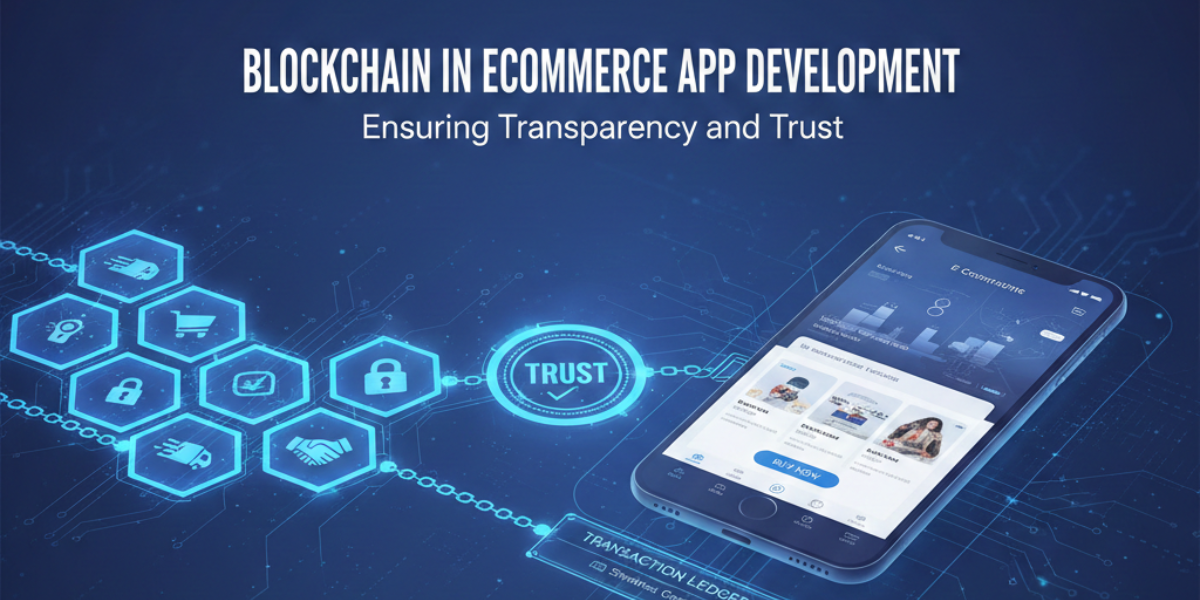
Blockchain in eCommerce App Development: Ensuring Transparency and Trust
Blockchain | By Aarti Jangid | 01-12-2025
In the past ten years, eCommerce has grown at a speed that has never been seen before. This has changed how people buy things, interact with businesses, and make financial decisions. But this growth also brings a lot of new problems, like fake goods, data breaches, prices that aren't mentioned, problems with seeing what's going on in the supply chain, and worries about unfair or changed reviews. Customers want businesses to be more open and trustworthy, and blockchain is a powerful tool that is making that possible.
Businesses may get an unprecedented degree of security, authenticity, and accountability by using blockchain technology into eCommerce app development. Blockchain is evolving from an optional enhancement to a requirement for companies looking to maintain their competitiveness in a trust-driven digital landscape by 2025 and beyond.
Why Blockchain Matters in eCommerce?
The blockchain technology provides various functionalities, such as transparency, decentralization, and immutability to maintain the financial transactions in eCommerce. With the help of these functions, ecommerce businesses can streamline their operations and tasks:
1. It Builds Unshakable Trust
Blockchain gets rid of the need for a single authority by keeping records of all transactions that can't be changed. Customers can check the product's authenticity, the seller's trustworthiness, and the past of their orders on their own. This makes buying a trust-first experience so that customers are sure that what they see is what they get.
2. It Secures Customer Data
In traditional eCommerce, private data is kept in centralized systems that can be hacked or breached. Because blockchain stores data in many places and protects every record, it is very hard for people who aren't supposed to be there to get to it. This makes personal data much safer, which gives users peace of mind during checkout and identity verification and helps companies avoid losses due to scams.
3. It Eliminates Counterfeit Products
Because blockchain gives every thing a unique digital identity, it is easy to keep track of them from production to delivery. By reading QR codes, customers can quickly make sure that things are what they say they are. This helps a lot with electronics, expensive items, drugs, and makeup. There is less chance of getting fake things, and brands can keep their identities safe.
4. It Enhances Supply Chain Visibility
Thanks to blockchain technology, every step of a product's supply chain can be tracked and verified. Provenance, processing, shipping dates, and quality evaluations are all visible to clients and businesses in real time. The company that offers ecommerce web development services says that this openness cuts down on disagreements, delays, and false information. It also helps ethical and environmentally friendly brands back up what they say with digital proof that can't be argued with.
5. It Supports Fast, Secure Global Payments
Blockchain makes it possible for people to send money to each other across borders and at low cost, without using banks or third-party servers. Chargebacks and scams are less likely to happen because transactions settle faster and are safer. Blockchain-based payments get rid of currency hurdles and lower transfer fees for foreign online shops. This makes shopping easier and more open to people all over the world.
6. It Automates Trust Using Smart Contracts
Intelligent contracts can do things right away, like return items, confirm shipments, or release payments, as long as certain conditions are met. This technology makes sure that processes are fair and balanced and gets rid of mistakes that people make. Companies save time and money by cutting down on running costs, and customers get clear replies right away.
7. It Improves Review Authenticity and Seller Credibility
Fake reviews and buyers who haven't been checked out hurt trust in eCommerce. Identity of sellers and customer reviews are saved as unchangeable data in blockchain, which means they can't be changed or influenced. This makes sure that platforms only show real reviews and confirmed sellers, which makes shopping safer and makes reputation systems more reliable.
8. It Modernizes Loyalty and Reward Programs
Blockchain makes it possible for reward programs based on tokens that are safe, portable, and hard to hack. Customers can earn digital coins instead of limited points that can only be used on a certain site. There are a lot of partner shops where you can use these tokens. You can also sell them for other tokens or gifts. This makes the experience more adaptable and fun, which makes people want to come back and stick with the company more.
Key Ways Blockchain Enhances Transparency and Trust
1. Verified Customer Reviews
eCommerce sites are still having a hard time with fake reviews. They trick people and hurt the image of the brand.
Blockchain offers a solution:
- Each review is tied to a verified purchase recorded on the blockchain.
- Sellers cannot delete or alter negative reviews.
- Customers cannot fabricate feedback without proof of transaction.
This creates a truly honest review ecosystem, benefitting both customers and ethical brands.
2. Product Authenticity Through Digital Certificates
There are a lot of problems with faking high-value things like technology, fashion, and luxury goods. Blockchain helps companies give out data proofs that their products are real.
When a product is manufactured, a unique digital token is assigned:
- Stored on blockchain
- Linked to product details
- Accessible via mobile app
When the product changes hands, ownership is updated securely and transparently.
3. Smart Contracts for Automated Operations
Built on blockchain, smart contracts are deals that carry out themselves. Based on rules that have already been set, they do things naturally.
In eCommerce apps, smart contracts can automate:
- Refunds
- Escrow payments
- Discounts and loyalty rewards
- Stock updates
- B2B agreements between suppliers
- Vendor payouts
Because smart contracts run exactly as coded, there is no room for manipulation or delays.
4. Improved Data Privacy and User Control
Customers' information is kept on central computers by traditional eCommerce apps, which makes them easy to hack and get into without permission. Blockchain lets people take control of their own data in open identity systems.
Using blockchain-based identity:
- Customers decide what data to share
- Brands cannot access or sell personal information without permission
- Data breaches become extremely difficult
This boosts consumer trust and ensures compliance with evolving global data privacy regulations.
How Blockchain Transforms eCommerce Business Models
Beyond transparency and trust, blockchain is redefining the business models of online commerce.
1. Decentralized Marketplaces
Blockchain makes it possible for P2P markets to work without middlemen. Blockchain takes care of trust, reviews, and deals, while users buy and sell directly. This lowers fees and gives small businesses around the world more power.
2. Token-Based Loyalty Programs
Most of the time, individuality and openness are missing from traditional reward programs. Blockchain lets users turn loyalty points into tokens that they can:
- Earn on every purchase
- Trade or redeem across brands
- Store securely in crypto wallets
3. Inventory Management and Automation
Blockchain makes real-time product info available to everyone who needs it. Information is shared between manufacturers, sellers, stores, and delivery partners so that there are fewer stock-outs, delays, and other problems with logistics.
4. Cross-Border Commerce
By eliminating unnecessary intermediaries, blockchain simplifies cross-border trade.
- Businesses benefit from:
- Lower transaction fees
- Faster settlements
- Transparent customs tracking
- Reduced currency conversion complications
Challenges of Blockchain in eCommerce App Development
While the benefits are immense, integrating blockchain into eCommerce apps includes challenges:
1. Scalability Limitations
High transaction volumes are difficult for many blockchain networks to process quickly. Slow processing times might interfere with smart contract execution, order updates, and payments as eCommerce systems grow. Developers must use scalable blockchains or Layer-2 solutions to get around issue, which increases technological complexity. Large, dynamic online marketplaces cannot be supported by blockchain without adequate scalability.
2. Regulatory and Legal Uncertainty
When it comes to data management, tokenized incentive distribution, and payment processing, among other blockchain and cryptocurrency-related topics, national rules vary widely. Companies may choose not to comply when requirements are not clear. It is critical for businesses to stay updated on regulatory changes and make necessary adjustments to their systems. Court costs, difficulties with acceptance, and difficulties with foreign online purchases are all exacerbated by this uncertainty.
3. High Initial Development Costs
Blockchain implementation calls for fresh frameworks, skilled programmers, and cutting-edge security measures. The expenses are much more when compared to the expenditures of traditional eCommerce development. For medium and small businesses, the financial hurdle can be too much to bear. Although blockchain technology may eventually save money, the upfront expenditures of developing, integrating, and testing it are a major barrier to its widespread use.
4. Energy Consumption Concerns
Some blockchain networks, particularly those that rely on Proof of Work, could have a high power consumption. This alters the sustainability objectives of internet stores and creates issues for the environment. Choosing the right consensus mechanism is still critical, even if newer blockchains have adopted better ones. Energy costs, their worldwide influence, and operational efficiency all need to be balanced.
5. Difficulty in Managing Data Privacy
Data saved on a blockchain cannot be deleted or changed since the blockchain itself is immutable. The General Data Protection Regulation (GDPR) and similar privacy standards make it difficult to comply as they require users to have constant access to their data and the option to edit or delete it as they see fit. Data entry and extraction from the blockchain requires careful planning by professional designers. It could be difficult for eCommerce systems to find the sweet spot between openness and privacy.
Why Blockchain Is the Future of Trust in eCommerce?
1. Verified Product Authenticity
For internet stores, selling counterfeit goods is a huge pain. BEvery single product now has its own distinct digital identification (ID) thanks to the advent of blockchain technology, and these IDs are recorded at each and every juncture in the supply chain. The authenticity of a product, the location from whence it originated, and the processing methods that were used to produce it are all pieces of information that may be found on a code.
2. Smart Contracts for Fair Transactions
Smart contracts reduce bias and trickery by implementing deals and rules automatically, without any help from a person. They promise that payments, returns, and shipping are all treated fairly in eCommerce based on verified blockchain data. Customers can be sure that deals will follow clear and uniform rules because of automation. It also gets rid of agents, lowers disputes, and speeds up payment.
3. Secure, Low-Cost Digital Payments
Peer-to-peer purchases are quick, safe, and don't need banks or other third parties to go through. With the help of a blockchain, it can take lower transaction fees as compared to others and a faster speed of payments. Merchants benefit from lower processing fees and fewer chargebacks for theft, and customers benefit from better checkout processes. This makes the whole payment environment more trustworthy.
4. Transparent Supply Chain Tracking
Most people who do their shopping online do not see where a product comes from in the supply chain. Rather, the blockchain creates a trustworthy chain of custody. This means that every part of the supply chain from sourcing, manufacturing, warehousing, and delivering is documented. This tracking of supply means there is higher quality assurance, accountability of ethical sourcing, and more precise delivery tracking. By providing purchasers with evidence rather than just promises, transparency increases confidence.
5. Authentic Seller Identities and Reliable Reviews
Fraudulent vendors and fake reviews damage the reputation of online marketplaces. Blockchain technology can store reviews and seller verifications in an immutable format that prevents reviews from being deleted or changed. Consumers may have faith that businesses are authentic and ratings are accurate. As a result, transactions are safer ,and trustworthy vendors are able to establish solid reputations.
Conclusion
With the level of transparency, trust, and security embedded in the technology, blockchain has the ability to transform the path of the consumer journey in eCommerce application development. Blockchain technology has the capability to change how companies operate and how customers view them, from payments and supply management to reviews and identity management. Blockchain technology-enabled eCommerce platforms will be leading the industry as customers seek more authentic, reliable ,and accountable interfaces. Blockchain development company that adapt early will not only improve efficiency and security, but they will also build lasting relationships with customers in an increasingly trust-driven digital world.

Aarti Jangid
| AuthorThis blog is published by Aarti Jangid.
Recent Blogs
.jpg "Benefits of Order Tracking Apps for E-Commerce")
Benefits of Order Tracking Apps for E-Commerce
Mobile Apps | 24-09-2026
.jpg "10 Ways Salesforce SMS Improves Customer Engagement")
10 Ways Salesforce SMS Improves Customer Engagement
Salesforce | 23-09-2026
.jpg "How Full Stack Development Supports Scalable Enterprise Apps")
How Full Stack Development Supports Scalable Enterprise Apps
Mobile Apps | 22-09-2026
.jpg "Seedance 2.5 vs Higgsfield for App Launch Videos")
Seedance 2.5 vs Higgsfield for App Launch Videos
Technology | 14-09-2026