
Data Security in CRM: The Hidden Risk Businesses Can't Ignore
CRM | By Khushboo Suthar | 19-11-2025
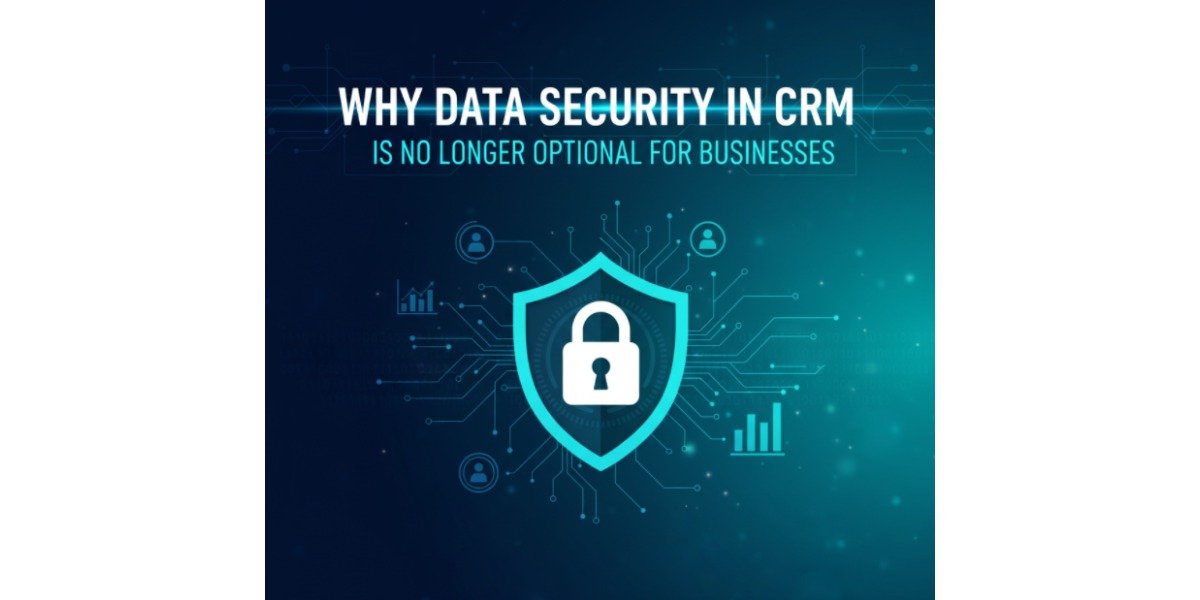
Customers today are far more aware of how their data is used. They expect transparency, protection, and accountability. A single data breach or compliance failure can destroy years of hard earned trust, lead to heavy fines, and damage your brand's reputation. So it's crucial to maintain the customers data with robust measures such as GDPR, HIPAA and so on.
Key Takeways:
- Cyberattacks targeting customer data have increased by 45% between 2021-2024, which is an average cost of a data breach $4.45 million 2024.
- Data security is a business continuous strategy, not just an IT issue.
- Secure CRMs drive trust, compliance and profitability.
- Indonesia, Thailand, Vietnam, Malaysia and Singapore are some of the top regions who are frequently attacked, with high rates of data breaches and significant activity on dark web forums for selling stolen data.
- India, China, South Korea have one of the highly developed data protection regimes under the Personal Data Protection Act (PDPA), which imposes strict obligations on businesses for collecting, using and disclosing personal data.
Business runs with carrying vast amounts of data of clients, which includes from personal identification to bank statements of clients. Data security works like a life blood which is crucial for every business to carry trust amongst customers. HIPAA,CCPA and GDPR are the security policies which facilitate customer data being protected and regulated. Don’t leave your CRM data to chance. Work with our experienced mobile app developers to create secure, scalable solutions that safeguard your business and customers. Let’s get deep into how data security in CRM is treated as a top-tier priority.
What is CRM Security?
The protection of CRM data is covered by the aspects and measures which are intended to ensure the security,completely permitted usage and also the reliability of information contained in the CRM system. A CRM has to be secure and it is a critical factor for business expansion. So basically there are 4 types of CRM operational, analytical, collaborative and strategic which includes automating sales, marketing, and also concentrates on long term goals like customer retention.
To secure the sensitive data, imposing strong security measures is a must, like details of customers, financial documents, etc. should be kept away from the sight and reach of hackers and unapproved persons. Good security practices in CRM help in restricting the access to this core information to just a few authorized people thus, lowering the risks of the incidents like breaches, misuse by the employees, or attacks from outside.
Data Privacy Vs. Data Security
Data Privacy and Data Security are two distinct but are equally critical components of CRM data protection.
Data privacy focuses on how data is collected, used, shared and governed. In the context of CRM, it means ensuring that customer data, such as names, email addresses, transaction histories and preferences is collected, stored and shared in compliance with privacy regulations like GDPR,HIPAA.Data privacy tools include browser extensions and add on, password managers, private browsers and email services, encrypted messaging, private search engines, file encryption software and so on.
Data security is all about the reflection of how those policies got enforced. Policies, procedures, and tools for protecting personal data are established by data security. Data security tools involved with identity and access management, data loss prevention, anti malware, anti virus, event management and data masking software.
Protecting Your CRM Data: Essential Steps
Protecting CRM data needs strategic planning and a team who understands the technical complexities and who understands the purpose of CRM data security. Here are the steps that every organisation should take to protect their CRM systems from internal risks and external threats:
1. Role Based Access Control
CRM data is sensitively handled, because it contains all the information about customers, even their financial records, which might be protected with robust measures. Role Based Access Control basically allows you to define user roles with specific permissions based on responsibilities. As an example, the sales department's access should consist of just leads and deals, and the UI/UX designer should only be able to access the website designing so they can edit all of the designs of the website. By limiting access to only what is necessary, you decrease attack surface as well as limit risks from misuse or insider threats by accident.
2. Use Strong Authentication Methods
One of the most popular ways for hackers to get in is through weak or reused passwords. Ask your staff to change passwords frequently and keep difficult passwords that hackers won’t be able to access. For added security, combine this with multi factor authentication, which can be a code texted to a smartphone or biometric authentication. Multi factor authentication can stop unauthorized access even if a password is compromised.
3. Encrypt Data in Transit and at Rest
Encryption is one of the most important security practices protecting data from unauthorized access. Furthermore, it is recommended that such measures be applied to data in transit as well. This means that in case your CRM data is intercepted or stolen the intruders will not be able to read it without having the right encryption key.
4. Regularly Back Up Your CRM Data
Having a good backup can be worked as an insurance policy. Set up consistent data, automated backups of your CRM data, and store them securely, as a best practice illustration, off site or in a cloud based environment away from your primary system. Regularly test backup restoration processes for the case that you experience a system failure or inadvertent data loss, you will be in a position to quickly restore the data.
5. Keep Your CRM Software Updated
Keeping your software updated as per the modern technologies and features that can protect against the latest threats. Delaying these updates can be harmful to your systems that could welcome hackers and attackers to your website.
6. Educate Employees on Data Security
Ongoing security training should provide education on: how to recognize phishing emails, creating strong passwords, responsible use of CRM tools, and how to report suspicious activity, etc. Train employees on protecting the data and make data protection a collective responsibility and part of your workplace or culture - not just an IT responsibility!
7. Conduct Regular Security Audits
Security audits help you cover the blind spots and vulnerabilities in your CRM Setup. These can include permission reviews, system configuration checks, third party integrations analysis, and penetration testing. Whether done internally or through a trusted external provider, regular audits give you the insight needed to close security gaps before they’re exploited.
8. Monitor for Suspicious Activity
Real-time monitoring tools can help discover the unusual behaviours including mass data exports, repeated failed login attempts or access outside business hours. Integrate your CRM with a Security Information and Event Management system or use built-in analytics to receive alerts and take action when peculiar behaviours are discovered.
9. Create a Data Retention Policy
Retaining irrelevant or outdated data increases risk and exposes you to risk of violating privacy laws. Develop clearly articulated policies around how long to retain CRM records, when to archive records and when to delete securely. You will want your policies to be sound given the industry you’re in, and you also don’t want to hold onto data unnecessarily, because it will cost you money.
10. Verify Third Party Integrations
Even if they extend the capability of the CRM, third-party applications could introduce security loopholes. Stick to trusted app vendors with good security in place and check on the permissions requested by each app before hooking it up to your CRM; it is normal for tools to solicit more access than they really need.
Key CRM Data Security Risks You Should Know About
Customer information kept in your CRM systems, such as demographic information, purchase history, communication preferences, sales metrics, and communication logs is at risk from a multitude of risks and security issues that can impact its integrity, availability and confidentiality.
CRM privacy concerns and threats can have serious consequences for your firm.
Unauthorized Access
Unauthorized access occurs when individuals gain access to CRM data they shouldn’t be able to see whether through stolen credentials, overly broad permission or failure to revoke access when employees change roles to leave the company. This can result in data being exposed, altered, or deleted without any detection. Without granular access controls and a user authentication system, it becomes nearly impossible to manage who sees what, putting your CRM data at risk.
Data Loss From Human Error
Data leaks are often done mistakenly by employees, such as accidentally deleting records, overwriting fields, or exporting data to unsecured locations. Without real time backups and role based restrictions, such errors can lead to permanent data loss or unintentional exposure.
Insider Threats
Threats do not always come from outside the organization, often it can be more involvement of employees who share confidential information with competitors. Access controls, audit logs, and user activity tracking are all necessary for your CRM to detect insider threats before the damage is done.
Benefits of a Secure and Compliant CRM
There are numerous benefits surrounds when your organisation prioritize data security in CRM, let’s know some top key benefits of a secure and compliant CRM:
1. Enhanced Customer Trust
Implementing security regulation policies such as HIPAA, or CCPA regulates the data in CRM, avoids threats and cyberattacks , brings trust amongst customers and loyalty which brings more business profit.
2. Reduced Financial Risk
Preventing beaches and ensuring compliance mitigates the risk of costly fines and legal fees.Such as, Avoids regulatory fines and legal costs, prevents data breach costs, minimizes downtime and operational disruptions and protects long term revenue and brand value.
3. Operational Efficiency
Operational efficiency takes lots of time and cost, which requires a strategic planning and lots of paper work which might disrupt the development cycle phase of a CRM tool. Automated compliance tracking and reporting streamline processes and reduce manual errors.
4. Competitive Advantage
As an organization gains trust amongst customers it means your organisation stands out in the existing market. It becomes a selling point that reassures clients and strengthens your brand reputation.
5. Future Ready Scalability
As privacy regulations evolve, a compliant CRM can easily adapt through regular updates and flexible policy configurations ensuring your business stays complaints over time.
The Future of CRM Security
As customer data grows in scale and complexity, the future of CRM security will be defined by automation, intelligence, and trust by design. The traditional, reactive security measures of the past, firewalls and passwords are no longer sufficient. Future CRM systems will combine AI driven intelligence, privacy first architecture, and global compliance alignment to create a secure digital ecosystem where data is both protected and ethically managed.
Conclusion
Customer data in the digital-first economy of today is not just information - it is the basis of business credibility and trust. As the CRMs become smart, interconnected ecosystems, protecting that data will be a responsibility that entails both strategy and ethics.
The topic of data security in CRM has changed to such an extent that it is no longer a matter of compliance but rather a continuous commitment to the protection of relationships, the maintenance of openness, and the adherence to integrity in all customer dealings. Companies that take the initiative to invest in modern security technologies ranging from AI-based threat detection to privacy-by-design frameworks will not only reduce the risk but also position themselves as trustworthy brands in a time when people are more conscious about data than ever before.
The future scenario favors the organizations that regard CRM security as an opportunity to win trust rather than as a mandatory requirement. When the companies incorporate strong safeguarding and ethically sound data usage into their customer interaction, they become strong, create trust, and have the chance of surviving in the long run, considering that trust is the most important factor for winning in competition.

Khushboo Suthar
| AuthorThis blog is published by Khushboo Suthar.
Recent Blogs
.jpg "Benefits of Order Tracking Apps for E-Commerce")
Benefits of Order Tracking Apps for E-Commerce
Mobile Apps | 24-09-2026
.jpg "10 Ways Salesforce SMS Improves Customer Engagement")
10 Ways Salesforce SMS Improves Customer Engagement
Salesforce | 23-09-2026
.jpg "How Full Stack Development Supports Scalable Enterprise Apps")
How Full Stack Development Supports Scalable Enterprise Apps
Mobile Apps | 22-09-2026
.jpg "Seedance 2.5 vs Higgsfield for App Launch Videos")
Seedance 2.5 vs Higgsfield for App Launch Videos
Technology | 14-09-2026