

KYC Software in 2026 and Beyond: The Evolution of Digital Identity, Intelligent Compliance, and Trust at Scale
Software | By Stella Andrew | 06-01-2026
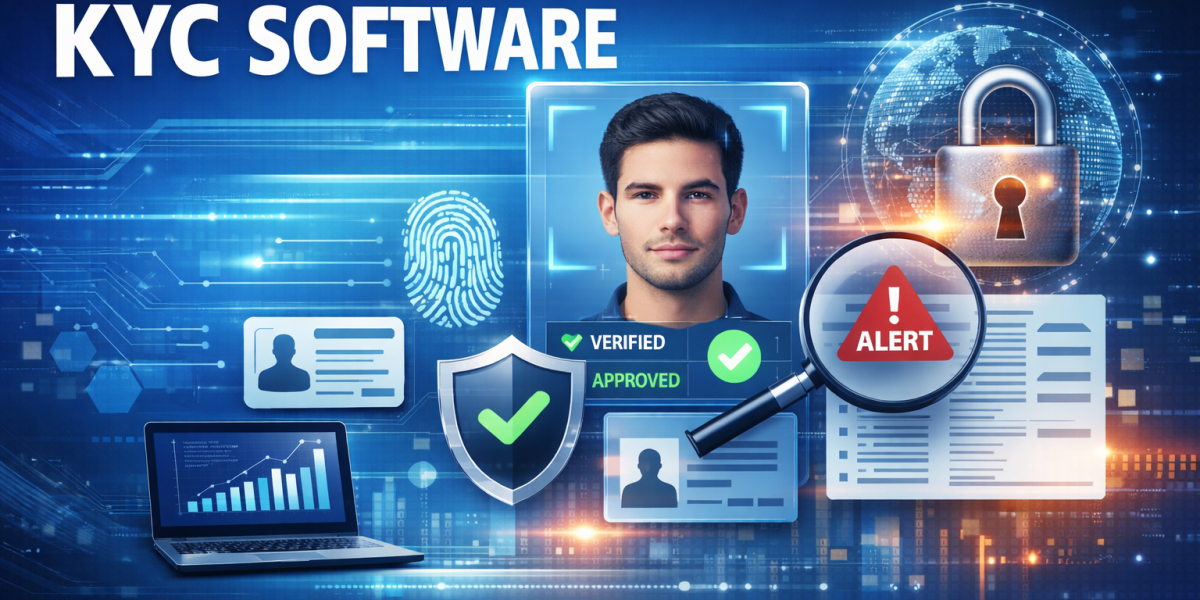
The online economy has rewritten the rule of trust in businesses. Customers are now opening bank accounts, trading crypto assets, accessing financial services, and making an appearance in digital platforms without going physically to an office. Even though this change has presented unparalleled growth opportunities, it has also brought both intricate identity fraud issues, regulatory compliance issues, and financial crime. The key component of these issues is KYC software, a crucial technology that helps organizations to verify identities and handle risk, as well as operate safely in an ever-regulated digital environment.
The KYC requirements were initially presented as a regulatory protection, yet in the contemporary world, the KYC verification software is turned into a strategic dimension of digital transformation. It does not only restrict itself to onboarding checks. Rather, it helps organizations to sustain identity checks, fraud detection, customer confidence, and compliance to regulations throughout the whole customer lifecycle.
With tighter regulations and fraud schemes, companies, which do not update their KYC practices, risk losing more than fines. They are at risk of losing customer loyalty, entry to the market, and sustainability.
The KYC Software in the Contemporary Environment
KYC software is a computerized platform that identifies and authenticates customers, determines their risk management, and adheres to the policies against money laundering and counter-terrorist financing. In contrast to the previous KYC procedures, which were based on the human-assisted and manual verification of documents and the use of human decisions, contemporary KYC tools have automated, smart, and scalable systems.
Advanced KYC verification software incorporates the authentications of identity documents, biometric authentications, database checks, and real-time risk analysis into one platform. This allows businesses to remotely and efficiently and accurately check on customers irrespective of the geographical location.
More to the point, the current KYC software is dynamic. It gets changed to match changing regulatory rules, it learns on evolving patterns of fraud and assists in ongoing monitoring instead of ongoing compliance.
The Manual to Intelligent Automation KYC Shift
Traditionally, KYC compliance was a laborious and time-consuming exercise. Customers used to submit the physical documents, compliance teams used to go through them manually and they were kept in piecemeal systems. This was very expensive, inaccurate and not appropriate in high volume digital set up.
The emergence of online banking, financial technologies, and cross-border digital services revealed the weaknesses of manual KYC. Businesses required quicker onboarding, more effective fraud prevention, and regional consistent compliance. This requirement prompted the implementation of electronic KYC which was able to identify identities over a distance.
The current KYC software is another development. AI, machine learning, and other hi-tech biometrics have transformed the process of identity verification into a real-time, data-driven enterprise. Automation has minimized human error, increased accuracy and allowed businesses to scale without loss of compliance.
The need to have KYC Software in place is strategic
Identity fraud is one of the threats that are rapidly increasing in a digital first world. With weak verification systems, criminals use data breaches, social engineering, synthetic identities, and deepfake technology to circumvent weak verification systems. Organizations that do not have effective KYC software are prone to exposure to fraud, financial risks, and fines.
A powerful protection that offers identities that are verified on various levels is KYC verification software. It authenticates the documents, biometric presence authentication, regulatory databases, and contextual risk assessment. Such a multi-layered system will greatly decrease the risk of fraudulent onboarding.
KYC software facilitates business expansion besides providing security. Quick and easy onboarding leads to better conversions and customer satisfaction. Constant obedience helps firms to venture into new markets without any fear. By doing so, KYC will be more of an enabler of growth and not an obstacle.
KYC Software as the Verification of Documents
The verification of identity documents is an essential part of KYC software. Nevertheless, the systems of today are much more than mere data extractors. They examine the authenticity of documents with advanced image processing and artificial intelligence and detect security features.
Complex security elements as those incorporated in government-issued documents include passports, national identity cards and driver’s licenses, and these differ by the country of issue. To ensure that the process of regulatory and design changes is continuous, KYC software has wide document libraries that are constantly updated.
Through large-scale document verification, automated businesses can achieve consistency, accuracy, and speed of onboarding operations at a global scale.
Authentication of persons through biometrics and emergence of electronic trust
The biometric verification is now one of the strongest in the present KYC software. Facial recognition technology will match the live image or video of the user with the image on their identification document and this way the holder of the document is in the physical presence.
Liveness detection is an addition of protection since it ensures that the user is not trying to spoof the system with photos, videos or masks. It is especially essential with the increasing access and sophistication of deepfake technology.
KYC based on biometrics enhances the security level and also makes the one using it better. With a smartphone camera, customers are able to verify in a couple of seconds and do not have to go through the tedious manual verification or face-to-face verification.
Artificial Intelligence as the main driver of KYC Software
The nature of artificial intelligence has completely changed the way KYC software works. Machine learning applications review large volumes of identity data to identify patterns, anomalies and new ways of committing fraud. AI-driven KYC solutions improve with time, unlike rule-based systems, which do not.
Contextual risk assessment is also possible with AI. KYC software operates dynamically with respect to risk evaluation by geography, evaluating the device intelligence, evaluating the behavior of the transactions and a history of risk analysis rather than using fixed thresholds to evaluate risk. This enables businesses to embrace enhanced due diligence only when required which lowers friction on low risk customers.
AI-powered automation can minimize false positives, enhance decision-making rates, and enable compliance teams to work on really high-risk instances.
Lifecycle-Based Compliance and Continuous KYC
A transition to continuous compliance is one of the biggest changes in KYC software. The regulators are increasingly asking businesses to monitor the risk of customers through the relationship and not only during onboarding.
Continuous KYC helps organizations to review risk according to the change in behaviour, transactional patterns and updates in external data. The system is capable of sounding an alarm when the risk level varies, asking for further verification or sending a case to the manual review list.
The lifecycle-driven model will make sure that compliance is not outdated with time and that there is less chance of having old or incomplete records of customers.
Regulatory Expectations and International Compliance Problems
The KYC rules differ depending on the jurisdiction, and the general principles are similar. It is the role of businesses to know who they are dealing with, take risk assessment, keep logs, and report on suspicious activity. Probably, non-adherence may lead to serious fines and a loss of reputation.
KYC software facilitates compliance with regulation by facilitating standardization of verification, and accommodates local needs. Data retention controls, audit logs and reporting tools help ease the process of proving compliance when regulatory bodies inspect their operations.
Adaptive compliance is highly important to organizations that conduct their business in different countries across the world. KYC software can help the business to meet the regulations of the region without repeat systems and procedures.
KYC Software Data Privacy and Security
Since the KYC software deals with very sensitive personal information, the protection of the data is prioritized. First-mover solutions apply encrypted data, access control, and secure data storage to safeguard the data of the users.
Privacy laws like GDPR have increased the standards on transparency, consent and minimization of data. Contemporary KYC verification software promotes the principles of privacy-by-design, meaning that the data retrieved and handled by the software is gathered and handled in a responsible manner.
Ethical factors are becoming important also. Companies need to make sure that KYC systems using AI are not biased, explainable, and fair. Both regulatory trust and customer trust involve transparency in the decision making.
Adoption of KYC Software by industry
Although banks and other financial institutions continue to be the biggest consumers of KYC software, there has been growth in the adoption of KYC software in various industries. Digital KYC enables Fintech companies to onboard users in a very short time and fulfill regulatory requirements.
KYC verification software is utilized by cryptocurrency exchanges to combat regulatory oversight and combat illegal transactions. Cryptocurrency platforms are exposed to high compliance risks without effective identity verification.
Insurance companies, online lenders, game platforms, telecommunication companies, e-commerce platforms, health platforms, and the gig economy also rely on KYC solutions. Any agency that supports online payments or operates controlled information is advantaged with the security of identity authentication.
Selecting the appropriate KYC Software Solution
The choice of the appropriate KYC software is a strategic choice whose impacts on compliance, customer experience, and scalability. The solutions to be considered by the businesses need to be analyzed according to their accuracy, worldwide reach, flexibility of integration and long-term versatility.
The API-based KYC software is flexible to provide the existing system with extensions and tailor the process. Scalability is an essential aspect of an organization that anticipates a high growth rate or variable levels of verifications.
A powerful KYC provider functions as a partner in compliance on an ongoing basis, constantly modernizing technology in accordance with the changes in the regulations and new threats.
KYC Software as a competitive advantage
In addition to compliance, the KYC software has turned out to be a competitive differentiator. The onboarding process is faster, decreases fraud, and standard operational compliance is enhanced, which leads to more efficient operations and improved customer satisfaction.
Those organizations that invest in modern KYC verification software are able to enter new markets with greater ease, establish relationships with regulated organizations, and enhance the relationships with the regulators.
KYC software has ceased to be a protective measure in an environment where trust is the key to success. It is a strategic asset.
Project Future of KYC Software and Digital Identity
There is convergence and innovation in the future of KYC software. The digital identity models, reusable credentials, and decentralized identity are transforming the way trust is developed over the internet.
Identity assurance will be further developed with the help of behavioral biometrics, device intelligence, and real-time analytics. Meanwhile, authorities will insist on more stringent regulation and openness.
KYC software is transforming into a trust orchestration platform which integrates identity verification, fraud prevention, and compliance into one ecosystem.
Final Thoughts
The secure and compliant digital business has become the backbone of KYC software. It helps organizations to establish identities, avoid fraud, and comply with their regulatory requirements, as well as creating a long-term trust with their customers.
The role of good KYC verification software will be increasing as digital ecosystems keep growing. Companies that invest in KYC as a strategic asset and not as a regulatory requirement will be in a better place to succeed in an ever complicated and interconnected global economy.
Under the digital trust, KYC software is not a luxury in the future. It is essential.
Frequently Asked Questions (FAQs)
What is KYC software?
KYC software is a computer program that authenticates the identity of customers, aids in preventing fraud and also makes sure that a person is not violating a regulation.
How does KYC software work?
It authenticates documents and conducts biometric verification and authorizes users to regulatory and security databases in real time.
What industries are using the KYC software?
The KYC solutions are typically used by banks, fintech, crypto platforms, insurance, online lending, e-commerce, and telecom companies.
Is the use of KYC software legal?
No, in controlled industries, such as finance and crypto, KYC verification is a necessity to adhere to the anti-money laundering laws.
What are the benefits of KYC software to business?
It eliminates fraud, enhances the speed of onboarding, and maintains regulatory compliance and develops customer trust.

Stella Andrew
| AuthorThis blog is published by Stella Andrew.
Recent Blogs
.jpg "Benefits of Order Tracking Apps for E-Commerce")
Benefits of Order Tracking Apps for E-Commerce
Mobile Apps | 24-09-2026
.jpg "10 Ways Salesforce SMS Improves Customer Engagement")
10 Ways Salesforce SMS Improves Customer Engagement
Salesforce | 23-09-2026
.jpg "How Full Stack Development Supports Scalable Enterprise Apps")
How Full Stack Development Supports Scalable Enterprise Apps
Mobile Apps | 22-09-2026
.jpg "Seedance 2.5 vs Higgsfield for App Launch Videos")
Seedance 2.5 vs Higgsfield for App Launch Videos
Technology | 14-09-2026