
The Role of Design Thinking in Developing High-Performing SaaS Products
Technology | By Alice Potter | 30-09-2025
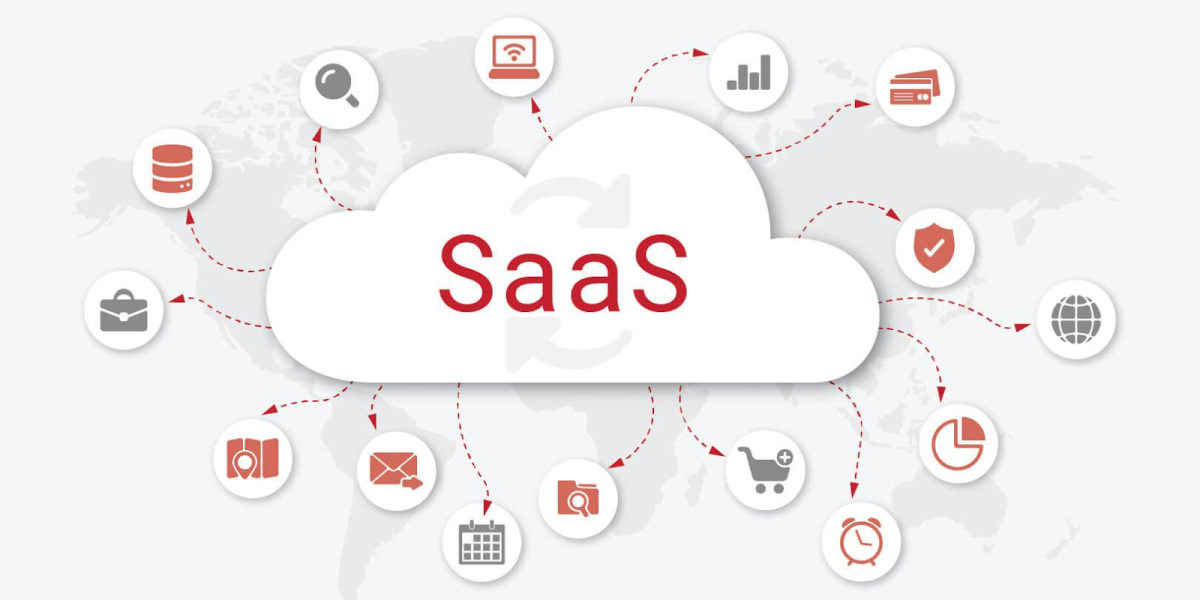
As the SaaS (Software as a Service) market becomes increasingly crowded, merely having technical skills isn’t enough to develop successful products. The most impactful SaaS solutions prioritize user needs, delivering smooth, engaging experiences—an objective achieved through a strong Design Thinking process.
What Is Design Thinking?
Design Thinking is a user-centric problem-solving methodology that emphasizes understanding user needs, challenging assumptions, and iterating solutions through prototyping and testing. Unlike traditional development approaches that prioritize features or technical specifications, Design Thinking puts empathy and creativity at the forefront.
The process typically follows five stages:
- Empathize – Understand the end users and their pain points.
- Define – Clearly articulate the core problems to solve.
- Ideate – Brainstorm a wide range of possible solutions.
- Prototype – Create simple versions of solutions to test assumptions.
- Test – Gather feedback, iterate, and refine the solution.
These stages build a flexible and repeatable structure as opposed to a fixed order. The teams are able to go back and forth through the stages as they get to know more about users and problem space. This flexibility is the real strength of Design Thinking - it promotes trial, minimizes the potential risk of failure through early testing, and makes sure that solutions are developed based on the needs of users.
Simply put, Design Thinking allows teams to design solutions not only that are viable and workable but also desirable and effective, which is why it is an indispensable tool in the innovation-oriented approach in the modern user-oriented world that moves at light speed.
Why Design Thinking Matters in SaaS Development
The SaaS sector is characterized by the dynamic environment that is highly innovative and changing customer demands and a subscription-based business model. Customer acquisition is only one aspect that determines success but customer retention and engagement. Design thinking is useful in overcoming such challenges in a number of important ways:
1. User-Centric Development
The SaaS products can have a varied audience with different levels of technical capabilities. Design thinking fosters the idea of empathy to the users, which allows the product teams to locate the points of friction and create solutions that are easy, simple, and pleasant to use. A user-friendly design will decrease the churn rates and enhance adoption.
2. Faster Problem Solving
The iterative nature of design thinking allows teams to be able to prototype and test their ideas rapidly prior to investing so much into the development. This not only saves on the resources that go to waste, but also makes sure that the end product meets the actual customer requirements.
3. Creating Difference in a Congested Market
It is crucial to be differentiated because there are numerous SaaS offerings in the market. Design thinking promotes creativity and innovativeness which enables companies to design experiences that are impressive or otherwise represented by uncommon or enhanced usability or more interesting interfaces.
4. Improved Collaboration
Designers, engineers, marketers, and business strategists may be required in the development of SaaS products. The cross-functional character of the design thinking dismantles silos and makes sure that teams are aligned.
5. Retention and Long-term Success
Largely SaaS depends on recurrent revenue therefore long-term retention is essential. An easy-to-use, properly designed product enhances customer satisfaction, decreases churn and creates additional opportunities in upselling and cross-selling.
Bridging the Gap: From Development to Real User Experience
One common mistake in SaaS development is to focus excessively on backend infrastructure, integrations, and feature lists without considering how the user will interact with the product. This is where the importance of UX design in SaaS becomes particularly clear.
A robust UX strategy ensures that user flows are logical, interfaces are intuitive, and interactions are satisfying. Incorporating UX principles as part of the Design Thinking process results in SaaS applications that are easier to adopt, quicker to learn, and more efficient to use.
For example, a SaaS project management tool may have powerful reporting features, but if the dashboard is cluttered or the navigation confusing, users will struggle to extract insights, limiting the tool’s effectiveness.
SaaS Development with Design Thinking.
Having determined why design thinking is important, we will consider how it can be applied in practice at every step of the SaaS product development.
1. Empathise: Knowing the User.
The initial one is the user research to know pain points, goals, and workflows. Some of them are interviews, surveys, usability testing and even ethnographic studies.
As an illustration, a SaaS firm developing a project management platform may find itself being overwhelmed by cluttered dashboards around a specific product category of users. Feeling their frustrations, the design team will be able to put more emphasis on the clarity and simplicity of the user interface.
Best Practices:
- Get involved in the interaction with the current and prospective users.
- Analyze the customer experience to determine the bottlenecks.
- Show personas that illustrate the various groups of users.
2. Define: Framing the Problem
The information obtained during the empathy phase is converted into an effective problem statement. In the case of SaaS, this is usually the detection of inefficiency or frustrations in the current workflows.
To illustrate, a problem statement like this one is useful in leading product teams to effective solutions; a problem statement such as marketing managers require a means of producing campaign performance reports without entering data manually.
Best Practices:
- Pay attention to needs of the user and not assumptions.
- Make problem statements short and to the points
- Rank problems in terms of frequency and impact.
3. Ideate: Developing Solutions.
Creativity is at the center focus in this stage. Cross functional teams brainstorm all ideas without evaluation. It is aimed at potential possibilities with a view to eliminating them to the most promising ones.
In the case of SaaS products, ideation can result in such features as automated data visualization, drag and drop workflow, or AI-based suggestions.
Best Practices:
- Apply the brainstorming method like mind mapping or crazy eights.
- Promote different viewpoints in order to become innovative.
- Consider ideas in terms of impact to the user and technicality.
4. Sample: Commercialising Prototypes.
Prototypes enable the teams to experiment with ideas before investing in a full-development. These may be wire frames, clickable mock ups or even sketches on papers.
In the case of SaaS, prototyping could mean making a clickable dashboard to check navigation or a virtual workflow to check the interactions.
Best Practices:
- Simple prototypes with major interactions.
- Early testing with actual users
- Quickly change according to feedback.
5. Test: Competency Testing and Refining
Testing will be used to make sure the solution is appropriate to the user needs and expectations. Teams are able to receive feedback at an early stage and make corrections prior to product launch.
An example is that where users realize that a reporting feature has too many clicks one can design it to simplify the procedure.
Advantages of Adopting Design Thinking.
Companies that effectively implement Design Thinking into their operations tend to have unlockable benefits that have a direct effect on product performance, customer satisfaction and general business development. It has some of the greatest advantages:
1. Better Conformity to the needs of users.
At the core of Design Thinking empathy, knowing what users want, need and have difficulty with. Real user insights prevent assumptions to lead the company making decisions, thus providing solutions that address real problems. This alignment leads to:
- Higher acceptance rates because users are finding the product easy to use and applicable.
- Less churn, as loyal customers have a higher chance of staying and subscribing again.
- Improved brand image, because products are always able to bring about meaningful experiences.
In the case of SaaS businesses, where retention becomes the source of recurring revenue, this alignment may be the difference between a booming growth and stagnation.
2. Faster Innovation Cycles
Conventional development processes have been known to undergo long planning and implementation cycles only to realize late on in the process that the solution is not up to the expectations of the users. Design Thinking reverses this by facilitating quick prototyping and multiple testing. Benefits include:
- Due to early validation of ideas and refinement within a limited time time-to-market accelerates.
- Lower cost of development, as issues are found before they have consumed much of the resources.
- More flexibility to changing user needs or market conditions.
This agility gives businesses an advantage over competitors by keeping pace with the latest trends in the market and constantly updating products in competition.
3. Cross-Functional Collaboration
Silos of teams is one of the greatest issues when developing a product. The designers, developers, marketers, and business leaders usually operate simultaneously, thus resulting in misalignment.
Design Thinking promotes interdisciplinary cooperation through:
- Introducing a variety of views in the process of brainstorming and problem definition.
- Inculcating the culture of shared ownership, whereby everybody will contribute to the product vision.
- Enhancing interdepartmental communication and friction.
This cross-functional synergy makes sure that the technical feasibility, business viability, and user desirability remain at the same time which leads to well-rounded solutions.
4. Better Product Development Successes.
Design Thinking also minimizes the chances of releasing products that fail to hit the mark by consulting the users during the development process and testing the ideas prior to scaling them. The advantages include:
- Better outcomes as the products are constantly tested on the actual users.
- Lower cases of expensive post-launch rework.
- High-consideration the stakeholders are more confident because the decisions made are supported by evidence, not guesses.
This eventually enhances the chances of creating products successful in the market and add sustainable value to the customers.
5. Better Customer Encounter and loyalty.
Design Thinking does not end at functionality but instead is centered on the creation of delightful experiences. In the case of SaaS products, this may entail a hassle-free onboarding process, user-friendly interface, or customized dashboards. When the customers like using a product:
- They are more engaged and they tend to entrench it into their working processes.
- They turn into promoters who suggest the product to the colleagues and bring organic growth.
- They are also loyal, which helps to increase lifetime value and minimize marketing expenses on retention.
6. Promotion of Culture of Innovation.
In addition to the product outcomes, Design Thinking influences the culture of the organization. Regular practicing teams attain curiosity habits, experimentation habits, and empathy habits. Over time, this leads to:
- A culture in which innovation is nurtured and not restricted in certain positions.
- A team that would be more flexible and adaptable to changes.
- An innovation advantage, as the innovation is built into the DNA of the company.
Best Practices:
- Stress test with a wide range of users
- Gather qualitative as well as quantitative feedback.
- Keep on repeating- design thinking is not about launching.
Real-World Impact: Design Thinking Success Stories
Several leading SaaS companies have embraced Design Thinking to build high-performing products. For instance, Slack’s emphasis on simplicity and seamless onboarding was not an accident—it was a result of deeply understanding user needs and iterating relentlessly on the design.
Similarly, Dropbox focused on clear communication of value and ease of use, making the initial file-sharing experience frictionless for users unfamiliar with cloud storage.
These successes highlight how a well-implemented Design Thinking process leads to higher user engagement, lower churn rates, and more positive reviews.
Best Practices for Applying Design Thinking in SaaS Development
- Start With Real User Research: Conduct interviews, surveys, and usability tests early in the process to gain deep insights into the users’ challenges.
- Cross-Functional Collaboration: Design Thinking thrives in environments where developers, designers, product managers, and marketers collaborate from the start.
- Rapid Prototyping: Build low-fidelity prototypes to test ideas quickly before investing in development, reducing time and cost.
- Iterative Feedback Loops: Continuously test and refine the product based on real user feedback, ensuring alignment with actual user needs.
- Focus on Minimal Viable Experience (MVE): Instead of overwhelming users with features, focus on delivering the core experience that solves their problem elegantly.
The Future of Design Thinking in SaaS
With the ongoing development of SaaS, design thinking will gain even greater importance. The trends such as the presence of AI, personalization, mobile-first experience will also require the ability to understand user behavior and iterate rapidly. Besides, innovation and trust, as well as transparency, may be balanced through design thinking as the issue of data privacy and compliance becomes more significant.
We can anticipate SaaS firms to incorporate design thinking further into their culture in the future, not only to develop a product, but also to support customers and onboard, and even to think about long-term strategy.
Conclusion
In the competitive SaaS landscape, adopting a Design Thinking mindset can be a game-changer. It shifts the focus from building features in isolation to creating meaningful, user-centered solutions. The importance of UX design cannot be overstated, as it ensures that even the most powerful backend systems translate into intuitive, high-performing applications.
Ultimately, SaaS products that successfully integrate Design Thinking are more likely to achieve long-term success, creating satisfied users and delivering measurable business value.

Alice Potter
| AuthorThis blog is published by Alice Potter.
Recent Blogs
.jpg "Benefits of Order Tracking Apps for E-Commerce")
Benefits of Order Tracking Apps for E-Commerce
Mobile Apps | 24-09-2026
.jpg "10 Ways Salesforce SMS Improves Customer Engagement")
10 Ways Salesforce SMS Improves Customer Engagement
Salesforce | 23-09-2026
.jpg "How Full Stack Development Supports Scalable Enterprise Apps")
How Full Stack Development Supports Scalable Enterprise Apps
Mobile Apps | 22-09-2026
.jpg "Seedance 2.5 vs Higgsfield for App Launch Videos")
Seedance 2.5 vs Higgsfield for App Launch Videos
Technology | 14-09-2026